
Biography Category
Name :
Jagjit Singh
Date :
Views :
571
Category :
Birth Date :
08/02/1941
Birth Place :
Ganganagar
Death Date :
10 October 2011
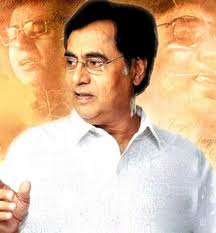
Known as "The Ghazal King", he gained acclaim together with his wife, another renowned Indian Ghazal singer Chitra Singh[3] in 1970's and 80's as the first successful husband-wife duo act in the history of recorded Indian music.[4] Together, they are considered to be the pioneers of modern Ghazal singing and regarded as most successful recording artistes outside the realm of Indian film music. Their combination album on HMV comprising music from films, Arth (Meaning, 1982) and Saath Saath (Together, Along, 1982), is India's largest selling combination album of all time. [5] Sajda (An Offering, 1991), Jagjit Singh's magnum opus double album with Lata Mangeshkar holds the same record in non-film category.[citation needed] He had sung in Punjabi, Hindi, Urdu, Bengali, Gujarati, Sindhi and Nepali languages. He was awarded India's third highest civilian honour, the Padma Bhushan, in 2003 for his contribution to the fields of music and culture.
Singh is credited for the revival and popularity of ghazal, an Indian classical art form, by choosing poetry that was relevant to the masses and composing them in a way that laid more emphasis on the meaning of words and melody evoked by them. In terms of Indian Classical music, his style of composing and Gayaki (singing) is considered as Bol-pradhan, one that lays emphasis on words. He highlighted this in his music for films such as Prem Geet (1981), Arth and Saath Saath (1982), and TV serials Mirza Ghalib (1988) and Kahkashan (1991).

